
Senior Care Insights
Expert Insights: The Importance of Elderly Care
As an expert in the field of elderly care, I have seen firsthand the significance of providing specialized services to help older individuals…
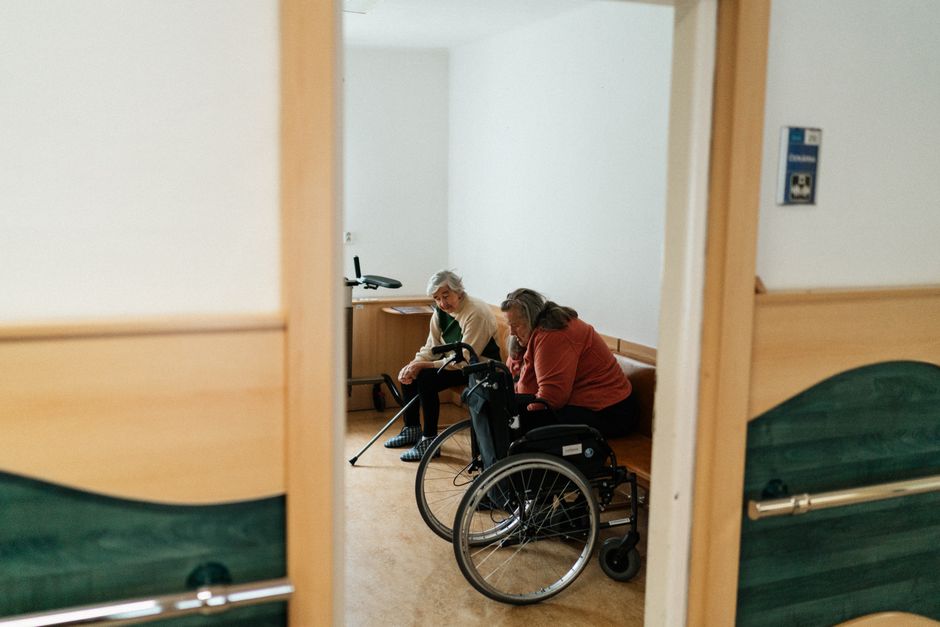
From kitchenettes to wardrobes and nurse stations, the built-in fixtures inside an aged care facility shape daily life for residents and staff in ways that go far beyond appearance. This article breaks down what good joinery looks like in a care home setting, and what to look for if you're buying an aged care business.
Commercial joinery refers to the custom-built, fixed timber and board-based fitments installed in non-residential buildings, things like cabinetry, shelving, benchtops, reception counters and storage units crafted specifically for a particular space and purpose. In Australia, the term covers everything from a café service counter to a hotel wardrobe, and the work is typically carried out by specialist trades rather than general builders.
In an aged care home, the stakes are higher than in most commercial environments. Joinery isn't just about aesthetics or storage capacity: it directly affects resident dignity, carer efficiency, hygiene standards and physical safety. A poorly designed wardrobe can strip a resident of independence. A benchtop with the wrong edge profile can become a fall risk. Cabinetry with visible joins or porous surfaces can harbour bacteria that infection control protocols are designed to eliminate.
Unlike a retail fitout, aged care joinery must accommodate mobility aids, varying resident heights, accessible hardware and tight regulatory requirements, all within rooms that are rarely a standard size. This is why most reputable providers commission bespoke joinery: pieces designed and built to exact specifications for a specific location and use case. Skilled joiners use precision techniques and tools, sometimes including equipment like a Domino joiner, to achieve tight, hygienic joints that hold up under daily institutional use.
Understanding this distinction matters enormously when you're assessing the condition and value of an aged care fitout, whether as an operator, a family choosing a facility, or a buyer conducting due diligence.
Good commercial joinery in an aged care kitchenette does something quietly remarkable: it lets a resident make their own cup of tea. That small act of independence carries enormous dignity, and the cabinetry, benchtops and storage behind it either enable or block it entirely. For families evaluating a care home, and for buyers assessing an aged care business, the kitchenette fitout is worth examining closely.
A well-designed kitchenette for aged care residents typically includes several practical features that balance independence with safety:
The materials chosen matter as much as the layout. Compact laminate and solid-surface benchtops are common in quality aged care fitouts because they resist moisture, are easy to wipe down and don't require grout lines where contamination can build up. Cabinet interiors lined with smooth, sealed board rather than raw particleboard are similarly easier to keep hygienic.
For buyers conducting due diligence on an aged care property, a kitchenette that combines accessible joinery with infection-control-friendly materials signals a provider that has thought carefully about both resident wellbeing and regulatory compliance, two factors that directly affect the facility's ongoing value.
A wardrobe might seem like a minor detail in a residential aged care fitout, but commercial joinery designed specifically for resident rooms plays a profound role in preserving independence, self-expression and everyday dignity. For someone moving into care, their wardrobe is often one of the few genuinely personal spaces they retain, and how it is built directly affects how well they can use it.
Thoughtfully designed resident wardrobes share several practical features that support both residents and care staff:
For families exploring care options, wardrobe quality is a practical signal of how seriously a facility has invested in resident experience. If rails are fixed too high, shelves are deep and cluttered, or handles require significant grip, a resident's day-to-day independence quietly erodes. This matters enormously, as our Moving Into Care guides explain, retaining a sense of control over small personal rituals is closely tied to emotional wellbeing after the transition.
For buyers assessing an aged care business, wardrobe joinery condition across resident rooms is worth inspecting carefully. Warped carcasses, broken drawer runners or damaged door hinges across multiple rooms signal deferred maintenance that will require capital expenditure, and may reflect broader fitout neglect worth exploring through your Aged Care in Australia due diligence research.
The nurse station is arguably where commercial joinery has the greatest impact on safety outcomes in an aged care home. Unlike a retail counter or a hospitality fitout, a nurse station must be designed around clinical workflow, infection control standards, and the reality that staff are touching surfaces constantly throughout a shift. Poor material choices or awkward layouts become infection risks, and in an aged care setting, that risk falls directly on vulnerable residents.
For nurse stations and clinical storage areas, specifiers typically look for:
Well-designed joinery separates clean and dirty zones within the station, dedicated drawers for PPE, separate locked compartments for medications, and clear counter zones for documentation versus clinical tasks. This zoning isn't just good practice; it aligns with Aged Care Quality Standards around safe medication management and infection prevention.
Facilities that have invested in purpose-built fitouts from specialists in aged care commercial joinery fitouts tend to show this zoning clearly in their documentation, something any prospective buyer should request and review before settlement.
When inspecting a facility, look beyond how the station looks and ask how it cleans. Scratched laminate, exposed particleboard edges near wet areas, and cluttered open shelving are all red flags worth noting.
When evaluating an aged care business for acquisition, the condition of the commercial joinery throughout the facility is far more than an aesthetic consideration: it directly affects regulatory compliance, infection control, staff efficiency and resident dignity. A thorough inspection of joinery before settlement can reveal hidden capital expenditure requirements that significantly affect the true purchase price.
Request records of any joinery replacements or repairs completed in the past five years. Ask whether the fitout was purpose-built using commercial joinery grade materials or adapted from residential-grade cabinetry, as the latter wears significantly faster in a care home environment. Understand who holds warranties, if any remain active, and whether the original manufacturer or installer is still operating.
A qualified joinery assessor or experienced fitout consultant can accompany you during due diligence to provide a written condition report, money well spent before committing to a significant acquisition.
From accessible kitchenettes and dignified wardrobes through to infection-resistant nurse stations and compliant storage, well-specified joinery is foundational to a high-quality aged care environment. Whether you are an operator reviewing your own facility or a buyer conducting due diligence, understanding what good commercial joinery looks like, and what to do when it falls short, puts you in a far stronger position to deliver safe, respectful and operationally sound care.
Get clear, jargon-free updates on aged care, senior support and care options in Australia — straight to your inbox.
As an expert in the field of elderly care, I have seen firsthand the significance of providing specialized services to help older individuals…

Learn about the importance of elderly care and the various forms of support available for aging individuals. Discover the laws and regulations that govern…

Learn about the positive effects of quality senior care on the lives of older individuals and how it can help them maintain their independence and quality…