
Senior Care Insights
Expert Insights: The Importance of Elderly Care
As an expert in the field of elderly care, I have seen firsthand the significance of providing specialized services to help older individuals…

Aged care in Australia is evolving rapidly, and facility operators who invest in meaningful resident experiences are seeing real rewards — both in wellbeing outcomes and in the eyes of prospective buyers. This article explores why enrichment programs, and specifically partnering with a ballroom dancing course provider, have become one of the most compelling value-adds in modern aged care.
For much of aged care's history, the benchmark for quality centred on clinical outcomes: medication management, fall prevention, wound care. Those foundations remain essential, but today's residents, families, and regulators expect something more — a genuine quality of life, not just quality of care. This shift has made structured enrichment programs a core feature of well-regarded facilities across Australia.
The reasons are well-documented. Social isolation and sedentary routines are strongly linked to cognitive decline, depression, and reduced physical function in older adults. Programs that get residents moving, connecting, and engaging — whether through art, music, gardening, or a ballroom dancing course — directly address these risks. The evidence base for activity-based interventions has grown steadily, and aged care standards under the Aged Care Quality Standards now explicitly require providers to support residents' individual goals and lifestyle preferences.
Beyond compliance, there is a cultural shift underway. Incoming generations of residents grew up with higher expectations of autonomy and lifestyle. Many have led active social lives and are unwilling to surrender that identity at the door of a care home. Facilities that respond with rich, varied programming signal to these residents — and their families — that life inside continues to be worth living.
In short, enrichment is no longer a nice-to-have. It is a strategic priority.
Bringing a structured ballroom dancing course into an aged-care facility is far more than a leisure add-on — it is a strategic decision that reflects a facility's genuine commitment to holistic resident wellbeing. For operators and prospective buyers evaluating what makes one facility stand out from another, a formal partnership with a qualified dance provider signals investment in programs that deliver measurable, real-world benefits.
Unlike a one-off entertainment booking, a genuine provider partnership involves scheduled, recurring classes led by trained instructors who understand how to adapt movement for older adults. This includes:
Reputable ballroom dancing course providers gain stable, long-term engagements rather than sporadic bookings, which means they can invest in instructor training specific to aged care. This mutual benefit creates partnerships that tend to be sustained and deepened over time rather than quietly dropped when budgets tighten.
From the facility's perspective, having a named, credentialed program partner also strengthens marketing materials, supports accreditation narratives around lifestyle enrichment, and gives families a concrete, tangible reason to feel confident in the care environment they are choosing for their loved one. In a sector where trust is everything, that specificity carries genuine weight.
When aged-care facilities introduce a structured ballroom dancing course into their activity calendar, the improvements residents experience go well beyond simple enjoyment. Research consistently shows that dance — particularly partner-based styles like waltz, foxtrot and social Latin — delivers measurable physical and cognitive gains that many conventional exercise programs struggle to match.
Ballroom dancing engages multiple muscle groups simultaneously, improving:
Because the activity feels social and pleasurable rather than clinical, residents are far more likely to participate consistently — and consistent participation is where the real health dividends compound over time.
Learning choreography, counting rhythms, anticipating a partner's movements and recalling sequences all place gentle demands on working memory and executive function. Studies published in neurological and gerontology journals have linked regular social dance to slower cognitive decline in older adults, with some research suggesting it may even stimulate neuroplasticity in ways that straightforward aerobic exercise does not.
For residents living with early-stage dementia, music-anchored movement can unlock emotional recall and reduce agitation — outcomes that support carers and families alike. Families researching residential options are increasingly aware of evidence like this; our Senior Care Insights section covers many of the wellbeing factors that inform those decisions. Understanding what genuinely improves resident quality of life is central to how aged care in Australia is evolving as a sector.
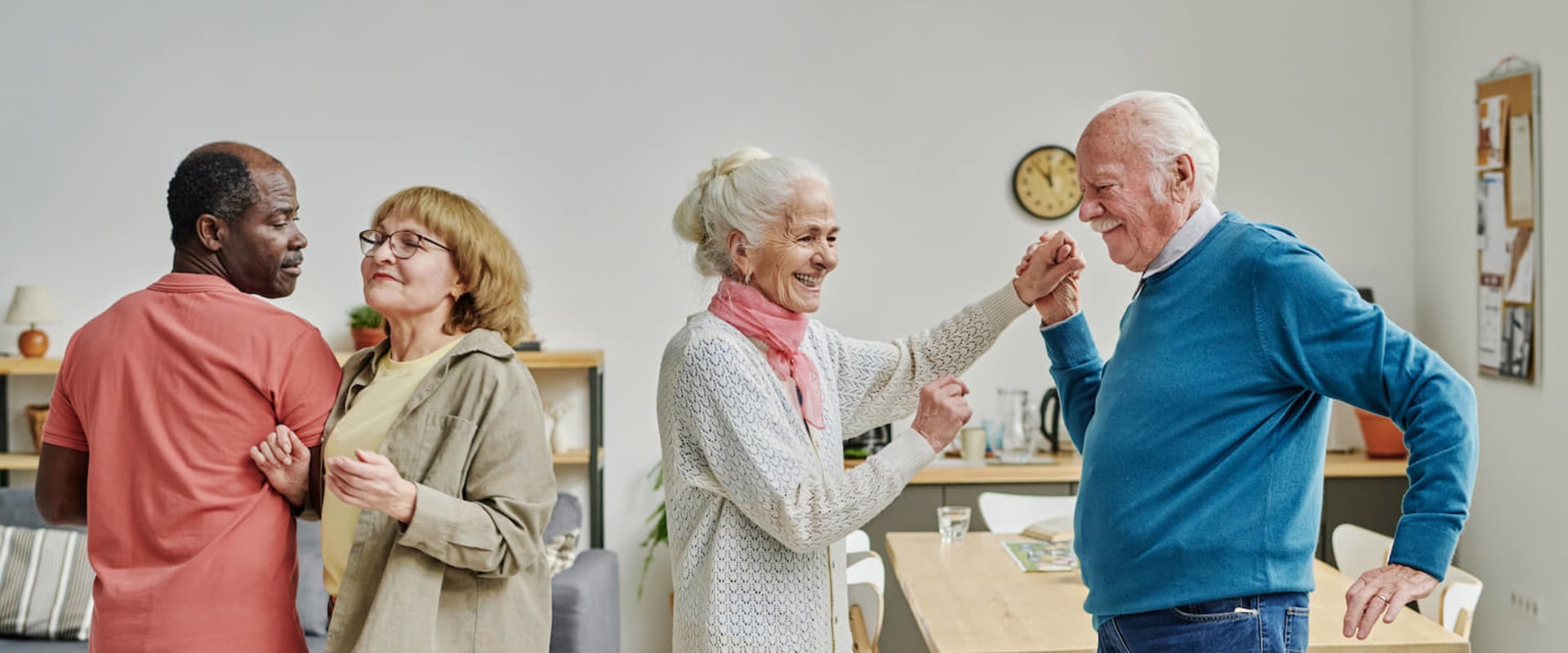
In Australia's competitive aged care market, prospective buyers and the families choosing a facility for a loved one are looking beyond bed counts and compliance ratings. They want evidence of genuine quality of life — and a structured ballroom dancing course delivers exactly that kind of visible, meaningful proof. When families tour a facility and see residents engaged, laughing, and moving together on a dance floor, the emotional impact is immediate and memorable.
First impressions carry enormous weight in facility selection. A dance program signals several things at once to prospective families:
For investors and operators considering an aged care acquisition, differentiated programming directly affects a facility's valuation story. A demonstrable enrichment calendar — particularly one anchored by a recognised activity like ballroom dancing — reduces perceived operational risk and supports premium positioning. It also indicates lower likelihood of regulatory concern around social engagement and resident dignity, two areas regulators scrutinise closely under the Aged Care Quality Standards.
Facilities that can point to consistent, third-party-delivered programs are better placed to justify stronger occupancy rates and higher accommodation pricing. In plain terms: a dance program is not just good for residents — it is a commercially sensible investment that makes a facility easier to sell and easier for families to choose with confidence.
Bringing a ballroom dancing course into your aged-care facility doesn't need to be complicated, but a thoughtful approach will help the program take root and deliver lasting value. Here's how to move from idea to ongoing activity with confidence.
Revisit the partnership annually. Rotate music styles, introduce themed evenings and celebrate milestones to keep energy high and prevent the program from becoming routine in a negative sense.
Enrichment programs like ballroom dancing represent far more than a leisure add-on — they signal a genuine commitment to dignified, joyful living that resonates with residents, families and prospective buyers alike. Facilities that invest in creative, evidence-backed partnerships are better placed to stand out in a competitive aged-care market while, most importantly, improving the daily lives of the people in their care.
Related reading: Aged Care Facility Modernisation Guide for Business Buyers: Infrastructure Upgrades That Drive Value
Get clear, jargon-free updates on aged care, senior support and care options in Australia — straight to your inbox.
As an expert in the field of elderly care, I have seen firsthand the significance of providing specialized services to help older individuals…

Learn about the importance of elderly care and the various forms of support available for aging individuals. Discover the laws and regulations that govern…
Learn about the positive effects of quality senior care on the lives of older individuals and how it can help them maintain their independence and quality…